Bibliometric analysis of artisanal textile clothing
DOI:
https://doi.org/10.29312/remexca.v17i2.4228Keywords:
artisanal textiles, bibliometric, handmade, traditional clothingAbstract
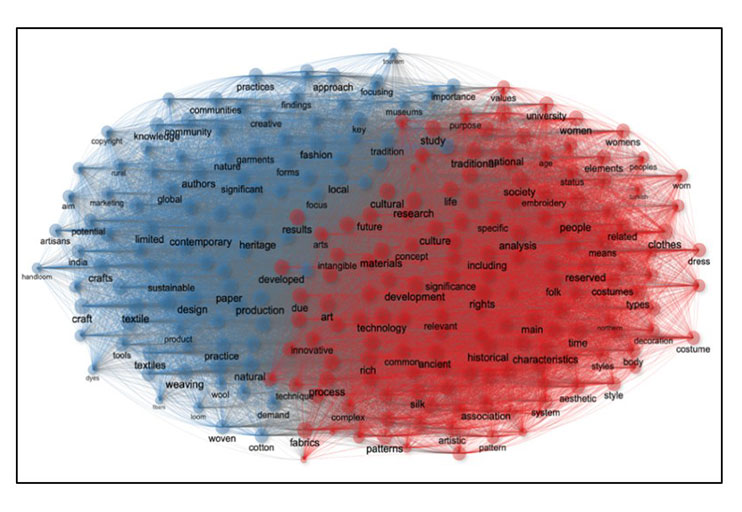
Studies on artisanal textile clothing (ATC) contribute to preserving this productive activity; this study aimed to conduct a bibliometric analysis on the topic of ATC using the Scopus digital library through the construction of an algorithm that allowed selecting documents that have addressed the subject during the last two decades and thus measure the scientific activity and identify the different study approaches from which it has been analyzed; the methodology used was divided into seven stages through which the consulted information was systematized; the metadata imported in CSV format were interpreted using the bibliometrix library of the RStudio program, version 4.4.2; among the main results, it was obtained that the scientific production on ATC in Scopus has increased by 4.7 times in the period analyzed, mostly under historical, anthropological and archaeological orientations, among others and with greater productivity within the Asian continent; likewise, greater connectivity was observed through the set of metadata via the term ‘traditional’ located in the abstract section; however, it is believed that within this segment of scientific production, it is necessary to develop research that addresses the current contexts on the ATC production, such as the value chain approach.
Downloads
References
Affinito, L.; Conti, G. M. and Motta, M. 2017. New vision on knitwear design. How the traditional craft methodologies are evolving into fashion international scenarios. The Design Journal. 20(1):2760-S2770. https://doi.org/10.1080/14606925.2017.1352787.
Antaki, B. and Medvedev, K. 2021. Bolivian textile crafts and the subversion of institutionalized sustainability. Clothing Cultures. 7(1):91-100. https://doi.org/10.1386/cc-00031-1.
Arriaga, N. R. y González, P. C. R. 2016. Efectos económicos del sector cultural en México. Universidad Autónoma Metropolitana (UAM). Análisis Económico. 31(77):219-246. https://www.redalyc.org/journal/413/41345703010/html/.
ATHM. 2025. Amercian textile history museum. Textiles: definition, types, history and uses. https://www.athm.org/textiles/.
Brambila, P. J. J. 2011. Bioeconomía: instrumentos para su análisis económico. Secretaría de Agricultura, Ganadería, Desarrollo Rural Pesca y Alimentación (SAGARPA). Primera edición, México, DF. 19-20 pp.
Clarke, R. C. 2007. Traditional Nepali hemp textiles. Journal of Industrial Hemp. 12(2):97-113. https://doi.org/10.1300/J237v12n02-07.
Cohen, J. H. and Browning, A. 2007. The decline of a craft: basket making in San Juan Guelavia, Oaxaca. Human Organization. 66(3):229-239 https://doi.org/10.17730/humo.66.3.w8877r7724520137.
Cohen, J. H.; Browning, A. and Montiel, I. F. A. 2011. The collapse of a craft: basketmaking in San Juan Guelavia, Oaxaca. Chungará (Arica). 43(2):257-266. https://dx.doi.org/10.4067/S0717-73562011000200007.
Del Carpio, O. P. S. 2012. Entre el textil y el ámbar: las funciones psicosociales del trabajo artesanal en artesanos Tzotziles de la Ilusión, Chiapas, México. Athenea Digital. Revista de Pensamiento e Investigación Social. 12(2):185-198. https://www.redalyc.org/articulo.oa?id=53723279010.
Deshpande, H.; Takahashi, H. and Kim, J. 2021. EscapeLoom: fabricating new affordances for hand weaving. Association for Computing Machinery. 630(21):1-13. https://doi.org/10.1145/3411764.3445600.
Devi, M. R; Poornima, N. and Guptan, P. S. 2007. Bamboo the natural, green and eco-friendly new-type textile material of the 21st century. Journal of the Textile Association. 67(5):221-224. https://www.researchgate.net/publication/283837761-Bamboo---The-natural-green-and-eco-friendly-new-type-textile-material-of-the-21st-century.
Duque, P.; Trejos, D.; Hoyos, O. y Chica, M. J. C. 2021. Finanzas corporativas y sostenibilidad: un análisis bibliométrico e identificación de tendencias. Semestre Económico. 24(56):25-51. https://doi.org/10.22395/seec.v24n56a1.
Fan, K. K. and Zhou, Y. 2020. The influence of traditional cultural resources (TCRs) on the communication of clothing brands. Sustainability. 12(6):2379. https://doi.org/10.3390/su12062379.
Flores, M. J. 2019. Mercancías únicas. La fantasía ideológica de la producción de textiles artesanales. LiminaR. Estudios Sociales Y Humanísticos. 18(1):49-60. https://doi.org/10.29043/liminar.v18i1.730.
Flores, R. J. A. 2023. El valor de las palabras clave en los artículos científicos. Gestión I+D. 8(1):11-13. http://saber.ucv.ve/ojs/index.php/rev-GID/article/view/25193.
Franco, M. S.; Arredondo, A. G. M.; Cruz, B. Y. and Endara, A. A. 2019. The use of dye plants in a Mazahua community in Central Mexico. Econ. Bot. 73(1):13-27. https://doi.org/10.1007/s12231-018-9431-5.
García, E. and Vinebaum, L. 2016. The Museo Textil de Oaxaca: a live space for the textile arts: Interview with Ana Paula Fuentes. Textile. 14(1):122-135. https://doi.org/10.1080/14759756.2016.1142787.
Granger, T. H. 2007. Weaving clothes to shape in the ancient world’ 25 years on: corrections and further details with reference to the cloaks from Lahun. Archaeological Textiles Newsletter. 13(1)13-25. https://doi.org/10.1179/TEX.1982.13.1.3.
Hendon, J. A. 2006. Textile production as craft in Mesoamerica: time, labor and knowledge. Journal of Social Archaeology. 6(3):354-378. https://doi.org/10.1177/1469605306067841.
Khan, I. K.; Nasir, A. and Saleem, S. 2021 Bibliometric analysis of post covid-19 management strategies and policies in hospitality and tourism. Front. Psychol. 12(13):769-760. Doi: 10.3389/fpsyg.2021.769760.
López, G. Á. A.; Nuñez-Fernández, C.; Vicente-Herrero, M. T.; Monroy-Fuenmayor, M. N.; Sarasibar-Ezcurra, H. y Tejedo-Benedicto, E. 2008. Análisis bibliométrico de la productividad científica de los artículos originales relacionados con salud laboral publicados por diferentes revistas españolas entre los años 1997 y 2006. Medicina Balear. 23(1):17-24. https://portalcientifico.universidadeuropea.com/documentos/63f6c2bf3dae6d15e23a8aca.
Ma, Q.; Abdeljelil, H. M. and Hu, L. 2019. The Influence of consumer ethnocentrism and cultural familiarity on brand preference: evidence of event-related potential (ERP). Front. Hum. Neurosci. 13(220):1-9. https://doi.org/10.3389/fnhum.2019.00220.
Marceleño, A. I. R. y Ariza, A. S. V. 2017. El tejido textil tarahumara. Hilos, cobija y faja. Chihuahua Hoy. 15(15):179-206. https://doi.org/10.20983/chihuahuahoy.2017.15.
Maseda, A.; Iturralde, T.; Cooper, S. and Aparicio, G. 2021. Mapping women’s involvement in family firms: a review based on bibliographic coupling analysis. International Journal of Management Reviews. 24(2):279-305. https://doi.org/10.1111/ijmr.12278.
Méndez, N. J. y Ávila, M. J. 2019. Tejedoras, bordadoras y armadoras en Yucatán: nuevas y antiguas clases trabajo en casa. Íconos. Revista De Ciencias Sociales. 23(65):155178. https://doi.org/10.17141/iconos.65.2019.3417.
Miguel, S.; Moya, A. F. y Herrero, S. V. 2007. El análisis de co-citas como método de investigación en bibliotecología y ciencia de la información. Investigación bibliotecológica. 21(43):139-155. http://www.scielo.org.mx/scielo.php?script=sciarttext&pid=S0187358X2007000200006&lng=es&tlng=es.
Molero, G. J. 2024. Vistiendo a la moda de la China: consumo de vestimenta oriental entre Nueva España y Sevilla durante el reinado de Felipe III. Investigaciones Históricas. Época Moderna y Contemporánea. 44(13):303-339. https://doi.org/10.24197/ihemc.44.2024.303-339.
Mondragón, T. B. 2024. Artisanal collaborations in the Mexican fashion industry: the case of Otomi embroiderers and Carla Fernández. fashion, style & popular culture, issue latin american/latinx fashion. 11(2):305-319. https://doi.org/10.1386/fspc-00238-1.
Moya, E. P. I.; Cortes, R. N. C. and Socha, L. J. C. 2024. Social innovation for conserving textile-craft practices in boyacá, Colombia. Apuntes del Cenes. 43(77):153-178. https://doi.org/10.19053/uptc.01203053.v43.n77.2024.16248.
O’Connell, M. J. 2021. Traditional weaving cultures in a global market: the case of Zapotec weavers. International Journal of Fashion Studies. 8(1):85-103. https://doi.org/10.1386/infs-00038-1.
Pérez, H. D. M. y Neme, C. S. 2021. La cadena de valor en la artesanía textil: el caso de la tira bordada tabasqueña. Nova Scientia. 13(2):1-22. https://dialnet.unirioja.es/servlet/articulo?codigo=8954527.
Raas, K. 2022. Pensar la persona a través del tejido: una propuesta de interpretación a partir del ejemplo de los tejidos jalq’a (Bolivia). Revista Española de Antropología Americana. 52(1):95-112. https://doi.org/10.5209/reaa.75690.
Rajput, P. S. and Aneja, S. 2021. IndoFashion: apparel classification for Indian ethnic clothes. IEEE/CVF conference on computer vision and pattern recognition workshops (CVPRW). 3930-3934 pp. Doi: 10.1109/CVPRW53098.2021.00440.
Salinas, R. K. y García, L. A. G. 2022. Bibliometría, una herramienta útil dentro del campo de la investigación. Journal of Basic and Applied Psychology Research. 3(6):10-17. https://doi.org/10.29057/jbapr.v3i6.
Song, J.; Post, Y. and Zhou, H. 2023. The application of clothing tying method in clothing design in the Ming Dynasty. Journal of Silk. 60(7):100-106. Doi: 10.3969/j.issn.1001-7003.2023.07.013.
Sorzano, R. D. M.; Galván, V. E.; Bonilla, O. M. E. y Ravina, R. R. 2022. Estudio bibliométrico del constructo teórico ‘víctima’: acercamiento a partir del conflicto armado en Colombia. Jurídicas CUC. 18(1):09-134. Doi: http://dx.doi. org/10.17981/juridcuc.18.1.2022.05.
Tacchetti, M.; Chocontá, P. A.; Quiceno, T. N. and Papadopoulos, D. 2023. Memorial reparation: women’s work of remembrance, repair and restoration in rural Colombia. Memory Studies. 17(6):1327-1345. https://doi.org/10.1177/17506980231188482.
Theodossopoulos, D. 2012. Indigenous attire, exoticization, and social change: dressing and undressing among the Emberá of Panama. Journal of the Royal Anthropological Institute. 18(3):591-612. https://doi.org/10.1111/j.1467-9655.2012.01778.x.
Tomás, G. V. y Tomás, C. V. 2018. La bibliometría en la evaluación de la actividad científica. Hosp Domic. 2(4):145-63. https://doi.org/10.22585/hospdomic.v2i4.51.
Vásquez, M. L. I. 2021. Stained supply chains: labor exploitation in the textile industry of China and India. Online Journal Mundo Asia Pacifico. 10(19):85-97. https://publicaciones.eafit.edu.co/index.php/map/article/view/7208.
Wang, H.; Zu, Y.; Su, J. and Zhang, Y. 2023. Comparison and analysis of influencing factors of the Tang and Song Dynasties. Journal of Silk. 60(5):135-142. Doi: 10.3969/j.issn.1001-7003.2023.05.018.
Xue, D.; Zhao, F.; Zhao, A. and Wang, S. 2022. Research on the skills of ‘knitting shoes’ in the tomb of Zhao Boqi in the southern song dynasty. Journal of Silk. 59(2):145-151. Doi: 10.3969/j.issn.1001-7003.2022.02.018.
Yan, B. and Deng, L. 2024. Analysis of the evolution of the clothing characteristics of the Northern Dynasty and its causes. Ournal of Silk. 61(11):130-138. Doi: 10.3969/j.issn.1001-7003.2024.11.015.
Zhang, Y. 2022. On the integration path of hand embroidery and machine embroidery needlework under the background of craftsmanship. Journal of Silk. 59(10):1-9. Doi:10.3969/j.issn.1001-7003.2022.10.001.
Downloads
Published
Issue
Section
License
Copyright (c) 2026 Revista Mexicana de Ciencias Agrícolas

This work is licensed under a Creative Commons Attribution-NonCommercial 4.0 International License.
The authors who publish in Revista Mexicana de Ciencias Agrícolas accept the following conditions:
In accordance with copyright laws, Revista Mexicana de Ciencias Agrícolas recognizes and respects the authors’ moral right and ownership of property rights which will be transferred to the journal for dissemination in open access. Invariably, all the authors have to sign a letter of transfer of property rights and of originality of the article to Instituto Nacional de Investigaciones Forestales, Agrícolas y Pecuarias (INIFAP) [National Institute of Forestry, Agricultural and Livestock Research]. The author(s) must pay a fee for the reception of articles before proceeding to editorial review.
All the texts published by Revista Mexicana de Ciencias Agrícolas —with no exception— are distributed under a Creative Commons License Attribution-NonCommercial 4.0 International (CC BY-NC 4.0), which allows third parties to use the publication as long as the work’s authorship and its first publication in this journal are mentioned.
The author(s) can enter into independent and additional contractual agreements for the nonexclusive distribution of the version of the article published in Revista Mexicana de Ciencias Agrícolas (for example include it into an institutional repository or publish it in a book) as long as it is clearly and explicitly indicated that the work was published for the first time in Revista Mexicana de Ciencias Agrícolas.
For all the above, the authors shall send the Letter-transfer of Property Rights for the first publication duly filled in and signed by the author(s). This form must be sent as a PDF file to: revista_atm@yahoo.com.mx; cienciasagricola@inifap.gob.mx; remexca2017@gmail.
This work is licensed under a Creative Commons Attribution-Noncommercial 4.0 International license.