Competitiveness of coffee production in Chiapas
DOI:
https://doi.org/10.29312/remexca.v17i4.3968Keywords:
coffee farming, coffee producers, competitiveness, PAMAbstract
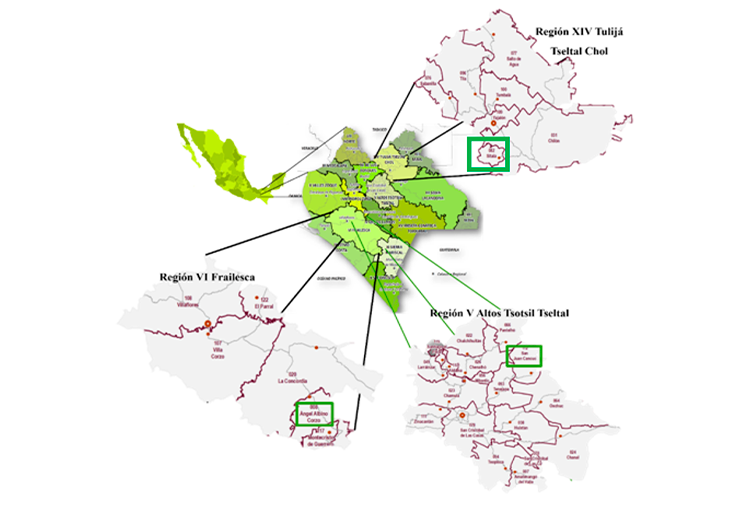
In Mexico, most of the coffee-growing sector consists of peasant and indigenous families, and coffee is produced on small plots. For the state of Chiapas, coffee production is the main source of income, and the state ranks first nationally in coffee production and exports, being considered competitive; however, it has dropped to 12th place internationally. Regarding income, it should be a profitable production, with profits to meet the family needs of coffee growers. The objective was to evaluate the competitiveness and comparative advantage of small coffee producers in three regions of the state of Chiapas by analyzing their costs, income, and profitability in order to generate marketing alternatives that reduce costs and improve their profits. The hypothesis is that, in coffee production, producers obtain positive net income from their traditional production tasks, which determine competitiveness for the study regions. The research project was conducted using a mixed-methods (quantitative and qualitative) approach in the 2021-2022 production cycle in three regions of the state of Chiapas: San Juan Cancuc, Ángel Albino Corzo and Sitalá, applying the policy analysis matrix. The results indicate that the three study areas are profitable and competitive and that they have a comparative advantage. Coffee production for the study areas is profitable and competitive, has a comparative advantage and can be improved by considering the political intervention towards small producers for improvements in their crops, which will have positive effects on plant yield, thereby obtaining quality products that can be better paid and strengthening coffee growers to improve the ability to market their product and encourage the expansion of the production area.
Downloads
References
Alvarado, M. C.; Juárez, T. H. y Ramírez, V. B. 2006. La comercialización de café en una comunidad indígena: estudio en Huhuetla, Puebla. Ra Ximhai. 2(2):293-318. DOI: https://doi.org/10.35197/rx.02.02.2006.01.cm
ASERCA. 2019. Agencia de Servicios a la Comercialización y Desarrollo de Mercados Agropecuarios. Reporte semanal del mercado agropecuario internacional. file:///c:/users/aarias/desktop/trabajos%202018/poa%202019/solilcitudes%202019/cafe/futuros20190325.pdf.
CEDRSSA. 2019. Centro de Estudios para el Desarrollo Rural Sustentable y la Soberanía Alimentaria. Investigación interna. Propuesta para reactivar la producción y comercialización de café en México 2019-2024. Cámara de Diputados. México, DF.
CEIEG. 2015. Comité Estatal de Información Estadística y Geográfica. Carta geográfica de Chiapas. 1 p. http://www.ceieg.chiapas.gob.mx/home/wp-content/uploads/downloads/productosdgei/info-geografica/carta-geografica-de-chiapas.pdf.
Cerquera, L. O. H.; Pérez, G. V. H. y Sierra, C. J. 2020. Análisis de la competitividad de las exportaciones del café del Huila. Tendencias. 21(2):19-44. https://doi.org/doi.org/10.22267/rtend.202102.139. DOI: https://doi.org/10.22267/rtend.202102.139
Cervantes, T. P. E. 2017. Un caso de éxito en la producción de café en Jaltenango, Chiapas. Revista Claridades Agropecuarias. 279:42-45.
Charpentier, F. y Mora, E. 1999. Aplicación de la metodología matriz de análisis de política (MAP): el caso de la cebolla amarilla en Costa Rica. In: memoria del XI Congreso Nacional Agronómico. Conferencia 52:471-481. http://www.mag.go.cr/congreso-agronomico-XI/a50-6907-I-471.pdf.
Eric, A. M. and Pearson, S. R. 1989. The policy analysis matrix for agricultural development. Cornell University Press. Ithaca, New York, USA. 279 p.
Figueroa-Hernández, E.; Pérez-Soto, F.; Godínez-Montoya, L. y Pérez-Figueroa, R. A. 2019. Los precios de café en la producción y las exportaciones a nivel mundial. Revista Mexicana de Economía y Finanzas. 14(1):41-56. https://doi.org/10.21919/remef.v14i1.358. DOI: https://doi.org/10.21919/remef.v14i1.358
Gómez-Posada. S. 2025. Quecafè. https://quecafe.info/la-economia-del-cafe-quien-se-esta-quedando-el-dinero/.
Gottfried-Hesketh, M. 2017. México, onceavo productor de café en el mundo. El Economista. https://www.eleconomista.com.mx/empresas/-Mexico-onceavo-productor-de-cafe-en-el-mundo--20170829-0056.html.
Hernández-Aguirre, P.; Puebla-Albiter, S.; González-Razo, F. J.; Rebollar-Rebollar, S. y Hernández-Martínez, J. 2024. Rentabilidad económica de café orgánico en Amatepec y Temascaltepec Estado de México. Revista Mexicana de Agronegocios. 55(28):37-46.
Hernández-Sampieri, R.; Fernández-Collado, C. y Baptista, L. Ma. del P. 2014. Metodología de la investigación. 6a. Ed. McGraw-Hill. México, DF. 600 p.
Isaí, J. 2019. La industria del café está muy pulverizada. El Heraldo de Chiapas. https://www.elheraldodechiapas.com.mx/local/la-industria-del-cafe-esta-muy-pulverizada-3430458.html.
Juárez, S. J. P. y Ramírez, V. B. 2007. El turismo rural como complemento al desarrollo territorial rural en zonas indígenas de México. Revista Electrónica de Geografía y Ciencias Sociales. 11(236):1-16. http://www.ub.edu/geocrit/sn/sn-236.htm.
Laguna, M. 2008. La crisis de pequeños productores de café. Fortuna. https://revistafortuna.com.mx/contenido/2008/02/15/la-crisis-de-pequenos-productores-del-cafe/.
López, L. E. C. y Caamal, C. I. 2013. Los costos de producción del café orgánico del estado de Chiapas y el precio justo en el mercado internacional. Revista Mexicana de Economía Agrícola y de los Recursos Naturales. 2(1):175-198.
Moguel, V. P. y Toledo, V. M. 1996. El café en México, ecología, cultura indígena y sustentabilidad. Ciencias. 43:40-51.
Monke, E. A. and Pearson, S. R. 1989. The policy analysis matrix for agricultural development. Ithaca, USA y Londres, Reino Unido. Cornell University Press. 279 p.
Morales, C. M. S.; Márquez, L. M. A. y Ávila, M. L. A. 2022. Persistencia de las formas de vida campesina. Identidad y patrimonio agrícola de la Región de los Llanos (Durango, México). Mundo Agrario. 51(22):1-16. DOI: https://doi.org/10.24215/15155994e176
OIC. 2016. Organización Internacional del Café. Informe provisional sobre la ejecución del programa de actividades de la Organización: del 16 al 01 de junio de 2016. 23 p.
OIC. 2018. Organización Internacional del Café. Informe del mercado de café-diciembre 2018. 8 p. http://www.ico.org/documents/cy2018-19/cmr-1218-c.pdf.
Pérez-Vázquez, A.; Pérez-Sánchez, O.; Lango-Reynoso, V. y Escamilla-Prado, E. 2024. El agroecosistema cafetalero: policultivo tradicional versus policultivo comercial en Chocamán, Veracruz. Revista Mexicana de Ciencias Agrícolas. 15(2):1-14. https://doi.org/10.29312/remexca.v15i2.3248. DOI: https://doi.org/10.29312/remexca.v15i2.3248
Rivera, R. C. R. 2022. Competitividad del café mexicano en el comercio internacional: un análisis comparativo con Brasil, Colombia y Perú (2000-2019). Análisis Económico. 37(94):181-199. https://doi.org/10.7440/res64.2018.03. DOI: https://doi.org/10.24275/uam/azc/dcsh/ae/2022v37n94/Rivera
Robles, B. H. M. 2011. Los productores de café en México: problemática y ejercicio del presupuesto. Mexican Rural Development Research Reports. Report 14. Woodrow Wilson International Center for Scholars, Washington, DC., USA. 62 p.
Salcedo-Baca, S. 2007. Competitividad de la agricultura en América Latina y el Caribe. Matriz de análisis de política: ejercicios de cómputo. FAO. Santiago de Chile, Chile. 99 p. https://web.archive.org/web/20210428210800/https://www.cepal.org/sites/default/files/courses/files/03-3-map-manual-fao.pdf.
SIAP. 2017. Servicio de Información Agroalimentaria y Pesquera. Avance de siembras y cosechas. http://infosiap.siap.gob.mx:8080/agricola-siap-gobmx/resumenproducto.do.
SIAP. 2021. Servicio de Información Agroalimentaria y Pesquera. Avance de siembras y cosechas. https://nube.siap.gob.mx/avance-agricola/.
SIAP. 2022. Servicio de Información Agroalimentaria y Pesquera. Avance de siembras y cosechas. https://nube.agricultura.gob.mx/avance-agricola/.
Taylor, S. J. y Bogdan, R. 1987. Introducción a los métodos cualitativos de investigación. La búsqueda de significados. 1a. Ed. Ediciones Paidós. Barcelona, España. 331 p.
Valencia-Sandoval, K. 2023. La competitividad del café mexicano en el mercado europeo. Ciencia Ergo Sum. 30(3):1-18. https://doi.org/10.30878/ces.v30n3a1. DOI: https://doi.org/10.30878/ces.v30n3a1
Vázquez-López, P.; Espinoza-Arellano, J. J.; González-Mancilla, A. y Guerrero-Ramos, L. A. 2022. Características de productores y plantaciones de café en la zona norte de Chiapas. Revista Mexicana de Ciencias Agrícolas. 13(28):101-111. DOI: https://doi.org/10.29312/remexca.v13i28.3266
Velázquez-López, J.; Juárez-Sánchez, J. P. y Ramírez-Valverde, B. 2020. Percepción y análisis de las políticas públicas de la producción de maíz en el centro oriente de Puebla, México. Cuadernos de Desarrollo Rural. 17:1-15. https://doi.org/10.11144/Javeriana.cdr17.papp. DOI: https://doi.org/10.11144/Javeriana.cdr17.papp
Xotlanihua-Flores, D. y Crespo-Stupková, L. 2024. Exportaciones del café mexicano a los mercados estadounidense y alemán. RIVAR. 11(32):150-169. https://doi.org/10.35588/rivar.v11i32.5971. DOI: https://doi.org/10.35588/rivar.v11i32.5971
Downloads
Published
Issue
Section
License
Copyright (c) 2026 Revista Mexicana de Ciencias Agrícolas

This work is licensed under a Creative Commons Attribution-NonCommercial 4.0 International License.
The authors who publish in Revista Mexicana de Ciencias Agrícolas accept the following conditions:
In accordance with copyright laws, Revista Mexicana de Ciencias Agrícolas recognizes and respects the authors’ moral right and ownership of property rights which will be transferred to the journal for dissemination in open access. Invariably, all the authors have to sign a letter of transfer of property rights and of originality of the article to Instituto Nacional de Investigaciones Forestales, Agrícolas y Pecuarias (INIFAP) [National Institute of Forestry, Agricultural and Livestock Research]. The author(s) must pay a fee for the reception of articles before proceeding to editorial review.
All the texts published by Revista Mexicana de Ciencias Agrícolas —with no exception— are distributed under a Creative Commons License Attribution-NonCommercial 4.0 International (CC BY-NC 4.0), which allows third parties to use the publication as long as the work’s authorship and its first publication in this journal are mentioned.
The author(s) can enter into independent and additional contractual agreements for the nonexclusive distribution of the version of the article published in Revista Mexicana de Ciencias Agrícolas (for example include it into an institutional repository or publish it in a book) as long as it is clearly and explicitly indicated that the work was published for the first time in Revista Mexicana de Ciencias Agrícolas.
For all the above, the authors shall send the Letter-transfer of Property Rights for the first publication duly filled in and signed by the author(s). This form must be sent as a PDF file to: revista_atm@yahoo.com.mx; cienciasagricola@inifap.gob.mx; remexca2017@gmail.
This work is licensed under a Creative Commons Attribution-Noncommercial 4.0 International license.