Use of a microbial consortium from the southeast of Coahuila with potential for its application as a biofertilizer
DOI:
https://doi.org/10.29312/remexca.v16i30.4046Keywords:
Bioinoculant, Bacillus, Debaryomyces, Kurtzmaniella, yeasts, MeyerozymaAbstract
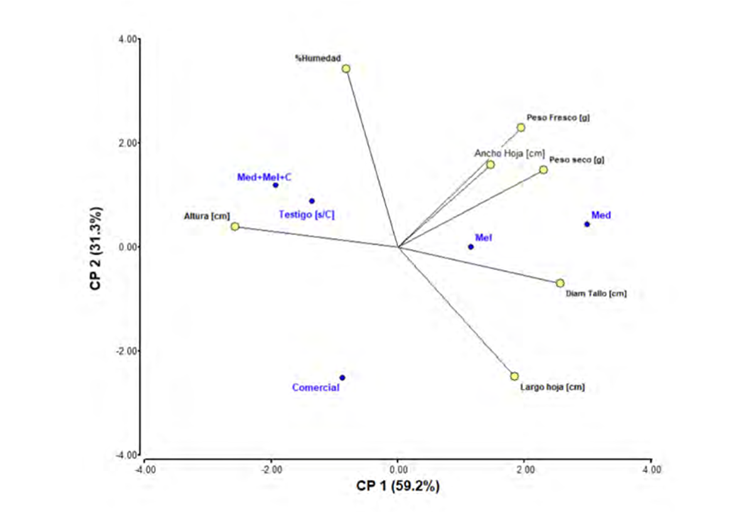
Environmental sustainability is becoming increasingly important, and in the case of agriculture, the aim is for resources to be economically sustainable, maximizing production and minimizing costs. Among the current options, biofertilizers have gained relevance as they are a promising alternative by improving plant nutrition and strengthening defenses with the use of beneficial microorganisms in the rhizosphere. Although biofertilizer production traditionally focuses on the selection, characterization, and formulation of individual isolates (strains) with desired traits to promote plant growth, evidence suggests that bioinoculants increase efficacy when using microbial communities (consortia). This work aimed to evaluate the biotechnological potential of a microbial consortium obtained from southeastern Coahuila, which was identified via massive sequencing of the 16S rRNA gene and the 18S rRNA gene and was made up mainly of the yeast genera Meyerozyma spp., Debaryomyces spp., and Kurtzmaniella spp., as well as bacteria of the genus Bacillus. The evaluation as a biofertilizer was carried out with three formulations, culture medium with consortium [Med+C] and two alternatives, molasses with consortium and culture medium plus molasses with consortium [Mel+C and Med+Mel+C]; they were evaluated under greenhouse conditions in Spinacia oleracea (spinach), and there were also a control (water) and a commercial product as treatments. The application of the different formulations, in particular Med+C, tends to increase the agronomic variables of the crop (height, stem diameter, leaf length and width, fresh weight and dry weight) and the amount of minerals (Fe, K and Cu) compared to the control treatment. The results obtained indicate that the application of microbial consortia significantly reduces the use of chemical fertilizers.
Downloads
References
Bhattacharyya, P. N. and Jha, D. K. 2012. Plant growth-promoting rhizobacteria (PGPR): emergence in agriculture. World Journal of Microbiology and Biotechnology. 28(1):1327-1350.
Botha, A. 2011. The importance and ecology of yeasts in soil. Soil Biology and Biochemistry. 43(1): 1-8. DOI: https://doi.org/10.1016/j.soilbio.2010.10.001.
Coraspe-León, H. M., Muraoka, T., Franzini, V. I., De Stefano-Piedade, S. M. and do Prado-Granja, N. 2009. Absorción de macronutrientes por plantas de papa (Solanum Tuberosum L.) en la producción de tubérculo-semilla. Interciencia. 34(1):057-063. http://ve.scielo.org/scielo.php?script=sci-arttext&pid=S0378-18442009000100011&lng=es&tlng=es.
Ding, B. X.; Cao, H. X.; Bai, Y. A.; Guo, S. C.; Zhang, J. H.; He, Z. J.; Wang, B.; Jia, Z. L.; Liu, H. B. 2024. Effect of biofertilizer addition on soil physicochemical properties, biological properties, and cotton yield under water irrigation with different salinity levels in Xinjiang, China. Field Crops Research. 308(1):109300. https://doi.org/10.1016/j.fcr.2024.109300.
Fu, S. F.; Sun, P. F.; Lu, H. Y.; Wei, J. Y.; Xiao, H. S.; Fang, W. T. and Chou, J. Y. 2016. Plant growth-promoting traits of yeasts isolated from the phyllo sphere and rhizosphere of Drosera spatulata Lab. Fungal Biology. 120(3):433-448. https://doi.org/10.1016/j.funbio.2015.12.006.
Hernández-Álvarez, C.; Peimbert, M.; Rodríguez-Martin, P.; Trejo-Aguilar, D. and Alcaraz, L. D. 2023. A study of microbial diversity in a biofertilizer consortium. Plos one. 18(8):e0286285. https://doi.org/10.1371/journal.pone.0286285.
Hernández-Fernández, M.; Cordero-Bueso, G.; Ruiz-Muñoz, M. and Cantoral, J. M. 2021. Culturable yeasts as biofertilizers and biopesticides for a sustainable agriculture: a comprehensive review. Plants. 10(5):822. https://doi.org/10.3390/plants10050822.
Hoben, H. J. and Somasegaran, P. 1982. Comparison of the pour, spread and drop plate methods for enumeration of Rhizobium spp. in inoculants made from presterilized peatt. Applied and Environ Mental Microbiology. 44(5):1246-1247. DOI: 10.1128/aem.44.5.1246-1247.1982.
Kavanagh, F. 1981. Métodos oficiales de análisis de la AOAC, 13va. Ed. Editado por William Horwitz. Asociación de químicos analíticos oficiales. Revista de Ciencias Farmacéuticas. 70(4):468.
Kumar, K.; Dasgupta, C. N. and Das, D. 2014. Cell growth kinetics of Chlorella sorokiniana and nutritional values of its biomass. Bioresource Technology. 167(1):358-366. https://doi.org/10.1016/j.biortech.2014.05.118.
Luo, J. C.; Long, H.; Zhang, J.; Zhao, Y. and Sun, L. 2021. Characterization of a deep-sea Bacillus toyonensis isolate genomic and pathogenic features. Frontiers in Cellular and Infection Microbiology. 11(1):629116. https://doi.org/10.3389/fcimb.2021.629116.
Mashatleh, M.; Assayed, A.; Al-Hmoud, N.; Alhaj-Ali, H.; Al-Abaddi, R. and Alrwashdeh, M. 2024. Enhancing sustainable solutions for food security in Jordan: using bacterial biofertilizer to promote plant growth and crop yield. Frontiers in Sustainable Food Systems. 8(1):1423224. https://doi.org/10.3389/fsufs.2024.1423224.
Mendez, F. D.; Pintor-Ibarra, L.; Rutiaga-Quiñones, J. y Alvarado-Flores, J. 2023. Capítulo 6: análisis elemental en la biomasa con fines energéticos. Aplicaciones Energéticas de la biomasa: perspectivas para la caracterización local de biocombustibles sólidos. 117-134 pp. https://repositoriouiim.mx/xmlui/handle/123456789/141.
Milera-Rodríguez, M. C.; Alonso-Amaro, O.; Iglesias-Gómez, J. M. y Medina-Salas, R. 2024. El azufre, mineral esencial en el manejo agroecológico de los sistemas agropecuarios. Pastos y Forrajes. 47. http://ref.scielo.org/b698hp.
Muthusamy, Y.; Sengodan, K.; Arthanari, M.; Kandhasamy, R. and Gobianand, K. 2023. Biofertilizer and consortium development: an updated review. Current Agriculture Research Journal. 11(1):1-17. http://dx.doi.org/10.12944/CARJ.11.1.01.
Odoh, C. K.; Sam, K.; Zabbey, N.; Eze, C. N.; Nwankwegu, A. S. and Laku, C. and Dumpe, B. B. 2020. Microbial consortium as biofertilizers for crops growing under the extreme habitats. Plant Microbiomes for Sustainable Agriculture. 381-424 pp. http://dx.doi.org/10.1007/978-3-030-38453-1-13.
Pirttilä, A. M.; Mohammad-Parast, T. H.; Baruah, N. and Koskimäki, J. J. 2021. Biofertilizers and biocontrol agents for agriculture: how to identify and develop new potent microbial strains and traits. Microorganisms. 9(4):817. https://doi.org/10.3390/microorganisms9040817.
Rennie, R. J. 1981. A single medium for the isolation of acetylene-reducing (dinitrogen-fixing) bacteria from soils. Canadian Journal of Microbiology. 27(1):8-14. https://doi.org/10.1139/m81-002.
Robas-Mora, M.; Fernández-Pastrana, V. M.; Probanza-Lobo, A. and Jiménez-Gómez, P. A. 2022. Valorization as a biofertilizer of an agricultural residue leachate: Metagenomic characterization and growth promotion test by PGPB in the forage plant Medicago sativa (alfalfa). Frontiers in Microbiology. 13(1):1048154. https://doi.org/10.3389/fmicb.2022.1048154.
Romero‐Cuadrado, L.; Picos, M. C.; Camacho, M.; Ollero, F. J. and Capote, N. 2024. Biocontrol of almond canker diseases caused by Botryosphaeriaceae fungi. Pest Management Science. 80(4):1839-1848. https://doi.org/10.1002/ps.7919.
Safdar, H.; Jamil, M.; Hussain, A.; Albalawi, B. F. A.; Ditta, A.; Dar, A. and Ahmad, M. 2022. The effect of different carrier materials on the growth and yield of spinach under pot and field experimental conditions. Sustainability. 14(19):12255. https://doi.org/10.3390/su141912255.
Sevillano-Caño, J.; García, M. J.; Córdoba-Galván, C.; Luque-Cruz, C.; Agustí-Brisach, C.; Lucena, C. and Romera, F. J. 2024. Exploring the role of Debaryomyces hansenii as biofertilizer in iron-deficient environments to enhance plant nutrition and crop production sustainability. International Journal of Molecular Sciences. 25(11):5729. https://doi.org/10.3390/ijms25115729.
Seymen, M. 2021. Comparative analysis of the relationship between morphological, physiological, and biochemical properties in spinach (Spinacea oleracea L.) under deficit irrigation conditions. Turkish Journal of Agriculture and Forestry. 45(1):55-67. https://doi.org/10.3906/tar-2004-79.
Shafeek, M. R.; Mahmoud, A. R.; Helmy, Y. I.; Omar, N. M. and El-Dewiny, C. Y. 2021. Middle east journal of agriculture research. 10(2):483-492. https://doi.org/10.36632/mejar/2021.10.1.12.
Vassilev, N.; Vassileva, M.; Lopez, A.; Martos, V.; Reyes, A.; Maksimovic, I. and Malusa, E. 2015. Unexploited potential of some biotechnological techniques for biofertilizer production and formulation. Applied Microbiology and Biotechnology. 99(12):4983-4996. https://doi.org/10.1007/s00253-015-6656-4.
Yadav, A. and Yadav, K. 2024. Desafíos y oportunidades en la comercialización de biofertilizantes. SVOA Microbiol. 5(1):1-14. http://dx.doi.org/10.58624/SVOAMB.2024.05.037.
Zhang, J.; He, N.; Liu, C.; Xu, L.; Chen, Z.; Li, Y. and Reich, P. B. 2020. Variation and evolution of C: N ratio among different organs enable plants to adapt to N‐limited environments. Global Change Biology. 26(4):2534-2543. https://doi.org/10.1111/gcb.14973.
Zhang, L.; Chen, F.; Zeng, Z.; Xu, M.; Sun, F.; Yang, L. and Xie, Y. 2021. Advances in metagenomics and their application in environmental microorganisms. Frontiers in Microbiology. 12:766364. https://doi.org/10.3389/fmicb.2021.766364.
Published
How to Cite
Issue
Section
License
Copyright (c) 2025 Revista Mexicana de Ciencias Agrícolas

This work is licensed under a Creative Commons Attribution-NonCommercial 4.0 International License.
The authors who publish in Revista Mexicana de Ciencias Agrícolas accept the following conditions:
In accordance with copyright laws, Revista Mexicana de Ciencias Agrícolas recognizes and respects the authors’ moral right and ownership of property rights which will be transferred to the journal for dissemination in open access. Invariably, all the authors have to sign a letter of transfer of property rights and of originality of the article to Instituto Nacional de Investigaciones Forestales, Agrícolas y Pecuarias (INIFAP) [National Institute of Forestry, Agricultural and Livestock Research]. The author(s) must pay a fee for the reception of articles before proceeding to editorial review.
All the texts published by Revista Mexicana de Ciencias Agrícolas —with no exception— are distributed under a Creative Commons License Attribution-NonCommercial 4.0 International (CC BY-NC 4.0), which allows third parties to use the publication as long as the work’s authorship and its first publication in this journal are mentioned.
The author(s) can enter into independent and additional contractual agreements for the nonexclusive distribution of the version of the article published in Revista Mexicana de Ciencias Agrícolas (for example include it into an institutional repository or publish it in a book) as long as it is clearly and explicitly indicated that the work was published for the first time in Revista Mexicana de Ciencias Agrícolas.
For all the above, the authors shall send the Letter-transfer of Property Rights for the first publication duly filled in and signed by the author(s). This form must be sent as a PDF file to: revista_atm@yahoo.com.mx; cienciasagricola@inifap.gob.mx; remexca2017@gmail.
This work is licensed under a Creative Commons Attribution-Noncommercial 4.0 International license.