Pruning management in blueberries and its effect on Lasiodiplodia spp.
DOI:
https://doi.org/10.29312/remexca.v17i1.3880Keywords:
Vaccinium corymbosum, canker, cultural controlAbstract
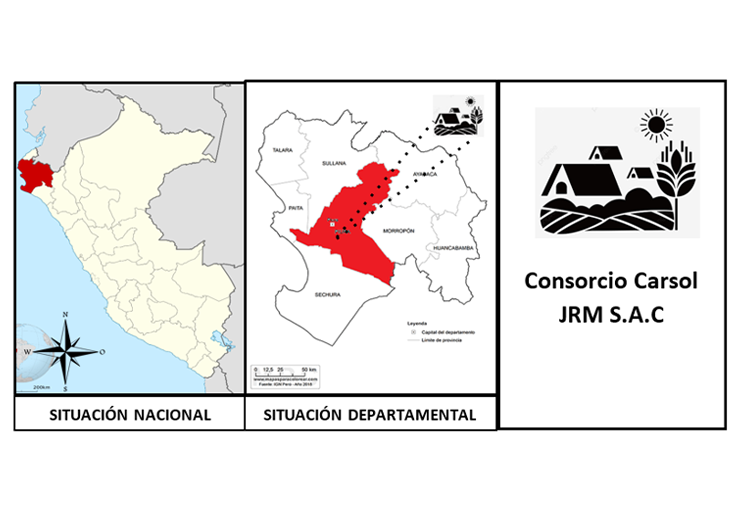
Blueberries (Vaccinium spp.) are a fruit with recognized medicinal properties and rich in antioxidants, vitamins, and fiber, which has boosted their global demand. Nonetheless, the crop faces certain challenges, such as ‘dieback’ by the fungus Lasiodiplodia spp., which can severely reduce production. To mitigate this disease, regular pruning is essential, improving air circulation and sunlight penetration, creating a less favorable environment for fungi. The objective of this research was to determine the effects of pruning management on the incidence of Lasiodiplodia spp. in crops of blueberries (Vaccinium corymbosum L.) var. Biloxi. The study was conducted in Piura, Peru, in 2022; different pruning treatments were evaluated in plants affected by Lasiodiplodia spp., using a CRD with five treatments and a control, with a sample size of two hundred plants; likewise, Duncan’s test was used to compare the effects. The results showed that more aggressive pruning, which removed more leaves and sap drawers, resulted in increased shoot growth due to the plants’ ability to regenerate in the face of severe stress, thereby stimulating greater production of growth hormones, such as cytokinins. Additionally, plants with aggressive pruning exhibited a higher incidence of Lasiodiplodia spp., suggesting that treatments T1 and T0 were the most balanced options. It was concluded that a combination of pruning techniques is essential to maintain the health of blueberry crops against the attack of Lasiodiplodia spp.
Downloads
References
Aguilar-Anccota, R.; Imán-Castillo, M. Á.; Silupú-Masías, J. A.; Rafael-Rutte, R.; Calle-Cheje, Y. H.; Campos-Silva, I. A. and Javier-Alva, J. 2024. Prospecting and management alternatives of fungal diseases associated in the blueberry crop (Vaccinium corymbosum L.). Agroindustrial Science. 13(3):163-171. https://doi.org/10.17268/agroind.sci.2023.03.07.
Alcántara-Cortes, J. S.; Acero-Godoy J.; Alcántara-Cortés, J. D. y Sánchez-Mora, R. M. 2019. Principales reguladores hormonales y sus interacciones en el crecimiento vegetal. Nova. 17(32):109-129. https://doi.org/10.22490/24629448.3639.
Ávila-Román, J.; Soliz-Rueda, J. R.; Bravo, F.; Aragonès, G.; Suárez, M.; Arola-Arnal, A.; Mulero, M.; Salvadó, M.; Arola, L.; Torres-Fuentes, B. and Muguerza, B. 2021. Phenolic compounds and biological rhythms: who takes the lead? Trends Food Sci Technol. 113:77-85. https://doi.org/10.1016/j.tifs.2021.04.050.
Camacho-Escobar, M. A.; Ramos-Ramos, D. A.; Ávila-Serrano, N. Y.; Sánchez-Bernal, E. y López-Garrido, J. 2020. Las defensas fisicoquímicas de las plantas y su efecto en la alimentación de los rumiantes. Revista Terra Latinoamericana. 38(2):443-453. https://doi.org/10.28940/terra.v38i2.629.
Camacho-Tapia, M.; Leyva-Mir, S. G.; Bautista-Cruz, M. A.; Almaguer Vargas, G.; Colinas León, M. y Tovar Pedraza, J. 2021. Efectividad de fungicidas y Trichorderma spp. para el control de Lasiodiplodia spp. en huertos de limón ‘Persa’ en Veracruz. Revista Mexicana de Ciencias Agrícolas. 12(2):345-53. https://doi.org/10.29312/remexca.v12i2.2551.
Carnelos, C.; Lozano-Miglioli, J.; Giardina, E.; Tognetti, J. y di Benedetto, A. 2022. Reanálisis de la acción de la citoquinina: los cambios anatómicos de la hoja juegan un papel clave en la promoción del crecimiento impulsada por la 6-bencilaminopurina en lechuga cultivada en maceta. Revista Chapingo. Serie Horticultura. 28(2):109-132. https://doi.org/10.5154/r.rchsh.2021.07.015.
Delgado-Oramas, B. 2020. La resistencia inducida como alternativa para el manejo de plagas en las plantas de cultivo. Revista de Protección Vegetal. 35(1):1-12. http://scielo.sld.cu/pdf/rpv/v35n1/2224-4697-rpv-35-01-e07.pdf.
Deloire, A.; Dumont, C.; Giudici, M.; Rogiers, S. y Pellegrino, A. 2022. Unas cuantas palabras sobre las yemas de invierno y la poda de respeto del flujo de savia. IVES Technical Reviews. https://doi.org/10.20870/ives-tr.2022.5512.
Flores-Hernández, H.; Flores-Gracia, J.; Varela-Fuentes, S. E.; Pérez-Rodrígue, A.; Azuara-Domínguez, A. y Monteon-Ojeda, A. 2021. Reporte de Lasiodiplodia theobromae (Pat.) Griffon y Maubl. en árboles cítricos de Tamaulipas. Revista Mexicana de Ciencias Agrícolas. 12(3):499-511. https://doi.org/10.29312/remexca.v12i3.2640.
Gutiérrez-Rodas, R. 2022. Efecto de la actividad antioxidante en una conserva de arándanos. Polo del conocimiento. 7(11):1243-1263. https://dialnet.unirioja.es/descarga/articulo/9263578.pdf.
INEI. 2023. Instituto Nacional de Estadística e Informática. Producción de arándano. https://www.inei.gob.pe.
Leyva-Mir, S. G.; Bautista-Cruz, M. A.; Almaguer-Vargas, G.; Colinas-León, M. T.; Tovar-Pedraza, J. M. y Camacho-Tapia, M. 2021. Efectividad de fungicidas y Trichorderma spp. para el control de Lasiodiplodia spp. en huertos de limón ‘Persa’ en Veracruz. Revista Mexicana de Ciencias Agrícolas 12(2):345-353. https://www.scielo.org.mx/pdf/remexca/v12n2/2007-0934-remexca-12-02-345.pdf.
Maticorena-Quispe, M. F. y Escobedo-Álvarez, J. A. 2024. Cinco tipos de poda en arándano (Vaccinium corymbosum L. cv. Biloxi) y su influencia en determinados parámetros productivos. Ciencia latina. Revista Científica Multidisciplinar. 8(3):3212-3228. https://doi.org/10.37811/cl-rcm.v8i3.11543.
Meléndez-Jácome, M. R.; Flor-Romero, L. E.; Sandoval-Pacheco, M. E.; Vasquez-Castillo, W. A. y Racines-Oliva; M. A. 2021. Vaccinium spp.: características cariotípicas y filogenéticas, composición nutricional, condiciones edafoclimáticas, factores bióticos y microorganismos benéficos en la rizosfera. Scientia Agropecuaria. 12(1):109-120. https://www.scielo.org.mx/scielo.php?script=sci-arttext&pid=S2007-09342019001000175.
Morales-Pizarro, A.; Neira-Rojas, I.; Saavedra-Alberca, E., Zapatel-Sime, K.; Álvarez, L.; Peña-Castillo, R.; Aguilar-Anccota, R.; Galecio-Julca, J. y Javier-Alva, J. 2023. Alternativas sostenibles para el control de Lasiodiplodia theobromae (Pat.) Griffon & Maubl en mango. Tropical and Subtropical Agroecosystems. 27(1):1-8. https://doi.org/10.56369/tsaes.4839.
Moreira-Morrillo, A. A.; Cedeño-Moreira, Á. V.; Canchignia-Martínez, F. y Garcés-Fiallos, F. R. 2021. Lasiodiplodia theobromae (Pat.) Griffon & Maul [(Sin.) Botryodiplodia theobromae Pat.] en el cultivo de cacao: síntomas, ciclo biológico y estrategias de manejo. Scientia Agropecuaria. 12(4):653-662. https://doi.org/10.17268/sci.agropecu.2021.068.
Normas Técnicas Peruanas. 2021. Arándano. Buenas prácticas agrícolas. INACAL.
Ormazábal, Y. M.; Mena, C. A.; Cantillana, J. C. y Lobos, G. E. 2020. Caracterización de predios productores de arándanos (Vaccinium corymbosum), según nivel tecnológico. El caso de la región del maule chile. Información Tecnológica. 31(1):41-52. http://dx.doi.org/10.4067/S0718-07642020000100041.
Orozco-Orozco, L. F. y Lozano-Fernández, J. 2022. Efecto de las podas sobre el rendimiento de Capsicum annum L. bajo dos ambientes. Agronomía Mesoamericana. 33(1):1-19. https://www.redalyc.org/journal/437/43768481005/43768481005.pdf.
Polanco-Florián, L. G.; Alvarado-Gómez, O. G.; Olivares-Sáenz, E.; González-Garza, R. y Pérez-González, O. 2020. Control biológico de Lasiodiplodia theobromae y Fomitopsis meliae causantes de la muerte regresiva de los cítricos. Revista Mexicana de Ciencias Agrícolas. 11(5):1069-1081. https://doi.org/10.29312/remexca.v11i5.2272.
Hidrología del Perú. 2020. Servicio Nacional de Meteorología e Hidrología del Perú. Pronóstico del tiempo. Ministerio del ambiente. https://www.senamhi.gob.pe/?p=pronostico-detalle&dp=20&localidad=0003.
Rascón-Solano, J.; Galván-Moreno, V.; García-García, S. y Hernández-Salas, J. 2021. Manual práctico para podas. Universidad Autónoma de Chihuahua (UACH). 16-20 pp. https://www.researchgate.net/publication/360383891-Manual-Practico-para-Podas.
Redagrícola. 2020. Experto recomienda estrategias para el control de este y otros patógenos. https://redagricola.com/andres-france-lasiodiplodia-principal-problema-arandano/.
Rodríguez-Gálvez, E.; Hilário, S.; Lopes, A. and Alves, A. 2020. Diversity and pathogenicity of Lasiodiplodia and Neopestalotiopsis species associated with stem blight and dieback of blueberry plants in Peru. European Journal of Plant Pathology. 157(1):89-102. https://doi.org/10.1007/s10658-020-01983-1.
Sallesses, L.; Moreno, K.; Delgado, V.; Quiñones, A.; Fernández, M. y Gyenge, J. 2023. La poda del arbolado urbano: repensando una práctica contraproducente. Visión Rural. 147:48-50. https://www.researchgate.net/publication/374199231-La-poda-del-arbolado-urbano-repensando-una-practica-contraproducente.
SNMHP. 2024. Servicio Nacional de Meteorología e Hidrología del Perú. Boletín mensual vigilancia de la radiación UV-B en ciudades del país. Ministerio del ambiente. https://repositorio.senamhi.gob.pe/handle/20.500.12542/3145.
SNSA. 2019. Servicio Nacional de Sanidad Agraria. 2019. Metodología de evaluación de plagas agrícolas. Dirección de Sanidad Vegetal del Perú.
Tinoco-Plasencia, C. J.; Zambrano-Casimiro, L. M.; Roque-Paredes, O.; Chávez-Mayta, R. W.; Maguiña-Vásquez, B. M. y Espejo Calderón, J. W. 2023. Los arándanos, generalidades y desarrollo en el mercado mundial: una revisión de literatura. Paideia. 13(1):125-140. https://doi.org/10.31381/paideia.v13i1.5674.
Valenzuela-Erazo, D. A. 2020. Efecto de la altura de poda en la producción de brotes o rametos ortotrópicos en condiciones de vivero. Revista de Investigación Talentos. 7(1):81-89. https://dialnet.unirioja.es/descarga/articulo/8551259.pdf.
Valverde-Otárola, J. y Arias, G. 2020. Efectos del estrés hídrico en crecimiento y desarrollo fisiológico de Gliricidia sepium (Jacq.) Kunth ex Walp. Colombia forestal. 23(1):20-34. http://www.scielo.org.co/scielo.php?script=sci-arttext&pid=S0120-07392020000100020.
Published
How to Cite
Issue
Section
License
Copyright (c) 2026 Revista Mexicana de Ciencias Agrícolas

This work is licensed under a Creative Commons Attribution-NonCommercial 4.0 International License.
The authors who publish in Revista Mexicana de Ciencias Agrícolas accept the following conditions:
In accordance with copyright laws, Revista Mexicana de Ciencias Agrícolas recognizes and respects the authors’ moral right and ownership of property rights which will be transferred to the journal for dissemination in open access. Invariably, all the authors have to sign a letter of transfer of property rights and of originality of the article to Instituto Nacional de Investigaciones Forestales, Agrícolas y Pecuarias (INIFAP) [National Institute of Forestry, Agricultural and Livestock Research]. The author(s) must pay a fee for the reception of articles before proceeding to editorial review.
All the texts published by Revista Mexicana de Ciencias Agrícolas —with no exception— are distributed under a Creative Commons License Attribution-NonCommercial 4.0 International (CC BY-NC 4.0), which allows third parties to use the publication as long as the work’s authorship and its first publication in this journal are mentioned.
The author(s) can enter into independent and additional contractual agreements for the nonexclusive distribution of the version of the article published in Revista Mexicana de Ciencias Agrícolas (for example include it into an institutional repository or publish it in a book) as long as it is clearly and explicitly indicated that the work was published for the first time in Revista Mexicana de Ciencias Agrícolas.
For all the above, the authors shall send the Letter-transfer of Property Rights for the first publication duly filled in and signed by the author(s). This form must be sent as a PDF file to: revista_atm@yahoo.com.mx; cienciasagricola@inifap.gob.mx; remexca2017@gmail.
This work is licensed under a Creative Commons Attribution-Noncommercial 4.0 International license.