elocation-id: elocation-id: e4220
In the last two decades, taro [ Colocasia esculenta L. Schott] cultivation in Actopan, Veracruz, has become more economically relevant; however, it faces multifactorial challenges. This study aimed to conduct a comprehensive analysis (productive, socioeconomic and environmental) of the taro agroecosystem. Geographic information systems and a survey of key actors were used. The results indicate a total average yield of 21.3 t ha-1and high profitability, with benefit-to-cost ratios (B/C) of 2.78 and 3.09 for the domestic and export markets, respectively. Nonetheless, factors such as rent costs reduce profit by 40%; likewise, the intensive use of continuous-flow irrigation compromises water and financial sustainability. It is concluded that the sector’s stability requires moving towards association schemes, implementing safety certifications and a technological redesign of irrigation to ensure the agroecosystem’s resilience in the face of market volatility.
multidimensional approach, production chain, profitability, sustainability, taro.
Taro [Colocasia esculenta (L.) Schott] is a strategic crop driven by demand from Afro-Caribbean and Asian markets ( Enríquez-Pérez et al., 2024). With an American production of 73 902 t in 2022 (FAOSTAT, 2025), Mexico stands out as a key exporter to North America. In Veracruz, the municipalities of Actopan and Úrsulo Galván lead production at 43 500 t year-1 (SADER, 2023), thereby consolidating a production chain based on the corm’s nutritional power and external demand (Nazario-Lezama et al., 2020; Garay-Peralta et al., 2024).
Despite this potential, the system faces a multifactorial crisis due to commercial informality, dependence on international markets, and price volatility (Valle-Martínez et al., 2012; López-Santos et al., 2018; Nazario Lezama et al., 2020). Added to this is the environmental impact of intensive agrochemical use, which degrades regional ecosystems (Pérez-Quezadas et al., 2017; Rodríguez et al., 2019; De la Cruz Elizondo et al., 2025).
The objective of this research was to analyze the taro agroecosystem in the Actopan sub-basin from a multidimensional perspective (productive, socioeconomic, and environmental) to identify its limitations and potentialities. The hypothesis states that the crop’s sustainability is conditioned by negative environmental externalities and economic vulnerability stemming from limited access to technology and the organizational disarticulation of producers.
The study was conducted from January to April 2025, in the municipality of Actopan, Veracruz, in the villages in Figure 1. This area has a population of 748 inhabitants (INEGI, 2025). The research employed a mixed qualitative and quantitative approach, with a descriptive scope and a cross-sectional design, aimed at analyzing the productive and operational structure of the taro agroecosystem.
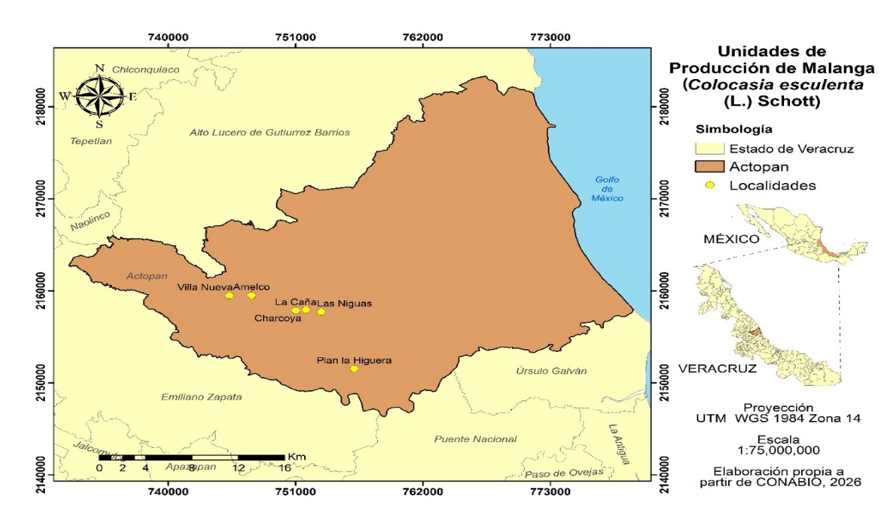
Sampling and data collection. Given the lack of updated censuses of producers in the area, informants were identified using a non-probabilistic sampling technique called snowball sampling. This method enabled us to identify the key actors that operate as value-added links (packers and exporters) within the chain.
Although the sample size is finite, its strategic selection ensures analytical representativeness of the dominant trade flow in the municipality, thereby reaching theoretical saturation according to the methodological criteria of Hennink and Kaiser (2022). Another collection technique used was a survey that included five dimensions: 1) producer profile; 2) general data of the production unit; 3) productive dimension; 4) socioeconomic dimension; and 5) structure of the value chain.
Agroecological zoning and technological tools: the biophysical characterization of the study area was conducted through a landscape analysis using Geographic Information Systems (QGis® software, version 3.28.15). This procedure allowed us to zone the crop based on the integration of bioclimatic variables, mainly temperature (°C) and average annual rainfall (mm year-1), and to identify the dominant edaphological characteristics of the production units.
Information analysis: The data derived from the multidimensional characterization were processed using descriptive statistics, with measures of central tendency to analyze the productive and socioeconomic variables. The financial analysis was based on constructing profitability indicators, including net present value (NPV), the internal rate of return (IRR), and the benefit-to-cost ratio (B/C), in order to evaluate the economic viability of the agroecosystem under different marketing scenarios. The results are for a local context, so it is not intended to generalize to other regions.
Taro (C. esculenta) shows optimal adaptability in warm sub-humid (Aw) and tropical regional climates, requiring thermal ranges of 15 to 35 °C to maximize its growth (Olguín-Utrera, 2023).
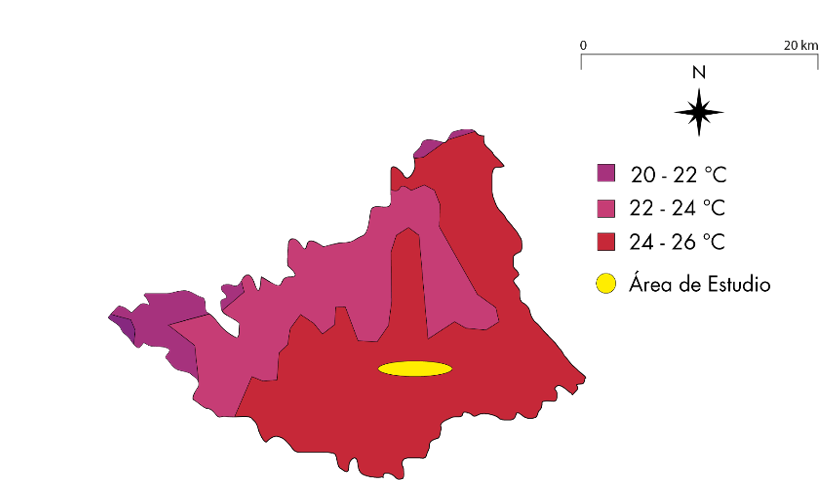
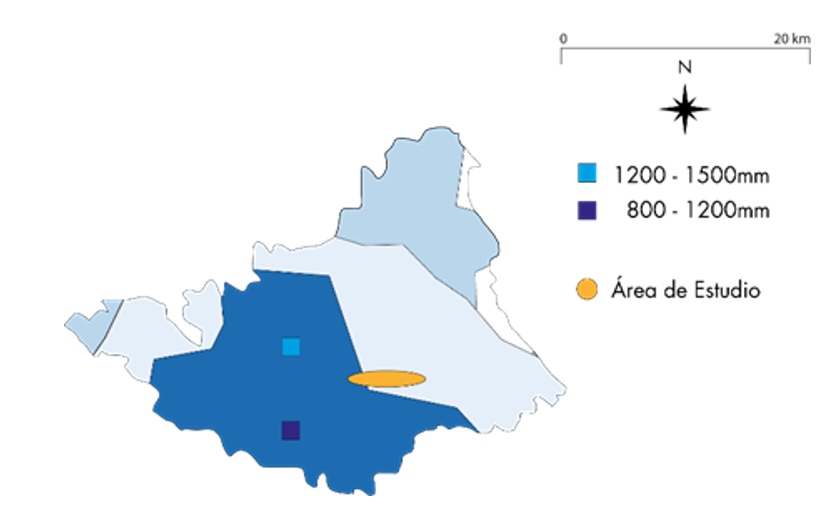
In Actopan, Veracruz, average annual temperatures range from 22 to 26 °C, and rainfall from 1 100 to 1 500 mm (Mazariegos-Sánchez et al., 2017); the municipality’s average annual rainfall ranges from 800 to 1 500 mm, with marked periods of drought; all of this favors the crop’s development, although seasonality influences phenology: summer planting takes advantage of the greater radiation to complete the cycle in 9 to 10 months, whereas in winter, the cycle extends to 12 months due to the thermal and photoperiodic decrease.
Due to its hydrophilic nature, the crop requires between 1 500 and 2 500 L of water per year via continuous-flow irrigation systems, supplied by the Actopan River (Olguín-Palacios, 2011). Edaphologically, clayey pelic Vertisols predominate in the north-center, and Phaeozems haplic with high organic matter predominate in the south, with pH of 6 to 7.5 and sandy loam to clay loam textures (De la Cruz-Elizondo et al., 2025); (Figures 2 and 3).
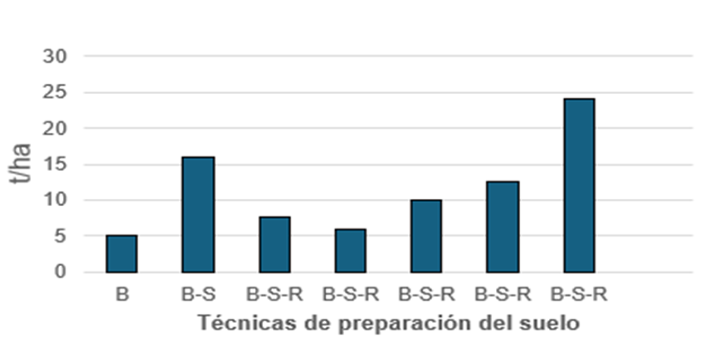
Ninety percent of producers are engaged exclusively in taro cultivation, with cycles of 10 to 12 months without rotation (Table 1).
| Locality | Cultivated area (ha) | Equivalent yield (t ha-1) |
|---|---|---|
| La Caña | 0.5 | 5 |
| La Caña | 9 | 7.7 |
| Villanueva, Charcoya and La Caña | 2.5 | 16 |
| Amelco | 7 | 6 |
| La Caña | 0.5 | 10 |
| Las Niguas | 0.5 | 12.5 |
| Plan de la Higuera | 0.6 | 24 |
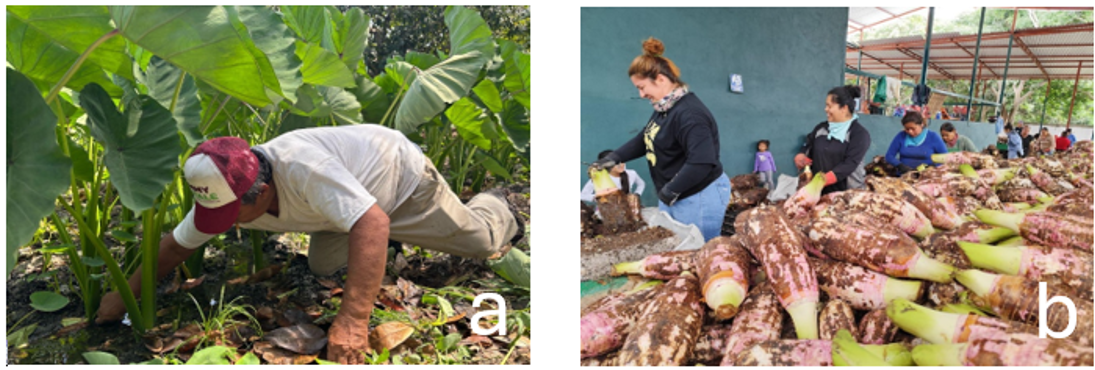
Intensive techniques such as the plowing-harrowing-furrowing binomial maximize yields, reaching up to 24 t ha-1under high-density and constant-moisture conditions (Figure 4).
The predominant vegetative material is the ‘malanga coco’ variety, characterized by its tall size and corms of up to 7 kg. Sixty-seven percent of farmers reported in the administered questionnaire that they use their own seeds; the plant is propagated using propagules, with seedling planting costs ranging from $8 000.00 to $24 000.00 ha-1.
Post-planting management is intensive, with up to six fertilizer applications, starting with 3 L ha-1of a rooting agent at transplant, followed by fractional applications of urea at 30-50 g plant-1 one month after planting, increasing after two months, to accumulate 150-300 g ha-1during the vegetative stage. Starting at 5-6 months, NPK fertilizers are applied by broadcasting in bands and agrochemicals such as Fomesafen, Chlorpyrifos, Agrimec, FoleyRey and Fusiflex are used to control weeds and pests.
However, current management generates negative externalities; the use of continuous-flow irrigation in 90% of the plots facilitates the leaching of nitrogen and phosphorus into the Actopan River, inducing eutrophication processes and degradation of aquatic biodiversity (Enríquez-Pérez et al., 2024).
The taro agroecosystem integrates a systemic form of energy flow, matter and socioeconomic dynamics. The plant converts radiation and inputs into biomass, while the soil provides water and nutrients, which sustain microorganisms and fauna that regulate the system’s ecological stability (Figure 5).
The social dimension of the taro agroecosystem is articulated through workforce management, which is essential for cultural tasks and phytosanitary maintenance. The production serves a dual purpose: it prioritizes the marketing of surpluses over family self-consumption. This dynamism integrates the producer into a socioeconomic network with suppliers of inputs (machinery, agrochemicals and plants), thereby consolidating the agroecosystem’s metabolism from the inflow of capital and resources to the outflow of the final product (Altiere and Nicholls, 2020).
The municipality of Actopan has established itself as Mexico’s primary taro producer, with the ‘coco’ variety standing out for its high yields and strong export demand. Nazario Lezama et al. (2020) confirm that the productive structure in Actopan is made up of small-scale producers with reduced land areas who achieve high yields that, in some cases, exceed 50 t ha-1, where a supply chain has gradually been consolidated (Parra-Melchor et al., 2023).
Taro production involves both fixed and variable costs, such as seedling acquisition, irrigation, planting density and phytosanitary management (Table 2).
A determining factor in profitability is land rent, which ranges from $50 000.00 to $100 000.00. Rent can reduce the (B/C) ratio by 40% and compromise the NPV in the event of falls in the international price. Excluding rent, the average initial investment is $146 428.00 allowing the producer to recover the investment in the first cycle. The sensitivity analysis shows that, even with high rents, the system maintains a B/C>1 (Table 3).
Financial indicators demonstrate superior profitability in the international market compared to the domestic market (González, 2024) (Table 4).
| Item | Market | |
|---|---|---|
| Domestic | International | |
| Average sales price ha-1 | $18 667.00 | $17 000.00 |
| NPV | $47 575.00 | $305 227.00 |
| IRR (%) | 46.51 | 184.42 |
| B/C | 2.78 | 3.09 |
Despite profitability, the sector faces price volatility and productive disorganization; prices fluctuated with seasonality, operating costs, and the supply-demand relationship, underscoring the need for public policies that strengthen the value chain under sustainability criteria (SADER, 2019; SE, 2024).
In 2025, 43% of producers depended on the domestic market ($16 000.00 - $20 000.00 t-1), facing weak negotiating power (FAO, 2021; INEGI, 2025). The remaining 57% exported to the United States, Canada and Europe, achieving margins of up to $355 000.00 ha-1under strict quality standards (FAO, 2020) (Table 5).
| Average price ($ t-1) | Average yield (t ha-1) | Gross revenue ($ ha-1) | Cost ($ ha-1) | Profit margin ($ ha-1) | |
|---|---|---|---|---|---|
| Domestic | 18 667 | 21.33 | 398 222 | 143 333 | 66 66 |
| Export | 17 000 | 35 | 595 000 | 192 500 | 355 |
Since its introduction in 2006 (Madrigal-Ambriz et al., 2018), taro in Veracruz has been consolidated under an income-optimization logic (Parra-Melchor et al., 2023). Currently, 66% of producers prioritize immediate profits and 34% seek financial stability; however, management is 100% individual and 87% of producers receive no institutional support (Aguilar et al., 2019).
Despite its success in markets in the United States and Europe, the system faces sustainability challenges due to intensive agrochemical use and water pressure, which requires the implementation of mitigation and agro-industrial diversification protocols, such as flour production, to strengthen the production chain (Rosado, 2018; FAO, 2021; Parra-Melchor et al., 2023).
The taro agroecosystem in Actopan is financially competitive and environmentally susceptible to change. The financial indicators reveal an IRR of 184.42% and a B/C ratio of 3.09 for the export market, which validates the system’s profitability relative to local sales. Nevertheless, it was identified that leasing costs act as a critical vulnerability factor, reducing profitability by 40%, which underscores the need to move towards association schemes that generate economies of scale and a stronger negotiating position in the face of market informality.
In the ecological environment, the results show that 90% of production units use continuous-flow irrigation, thereby facilitating the leaching of nitrogen and phosphorus into the Actopan River sub-basin. The sector’s stability requires an agro-industrial diversification strategy, transforming the current model of immediate revenue optimization into a resilient agroecosystem capable of mitigating price volatility and ensuring the sustainability of water resources in Veracruz.
Garay-Peralta, I.; Herrera-Alarcón, J.; Díaz-Criollo, A.; Domínguez-Vázquez, M. D. y Garza-Ortega, J. A. 2024. Desarrollo fenológico del cultivo de malanga en condiciones de invernadero: Desarrollo del cultivo de malanga. Revista Mexicana de Agroecosistemas. 11(2):135-143. https://doi.org/10.60158/rma.v11i2.439.
López-Santos, Y.; Arvizu-Barrón, E.; Asiain-Hoyos, A.; Mayett-Moreno, Y. y Martínez-Flores, J. L. 2018. Análisis competitivo de la actividad productiva de la malanga: un enfoque basado en la teoría de Michael Porter. Revista Iberoamericana para la Investigación y el Desarrollo Educativo. 8(16):729-763. https://doi.org/10.23913/ride.v8i16.366.
Madrigal-Ambriz, L. V.; Hernández-Madrigal, J. V.; Carranco-Jáuregui, M. E.; Calvo-Carrillo, M. D. L. C. y Casas-Rosado, R. 2018. Caracterización física y nutricional de harina del tubérculo de ‘Malanga’ (Colocasia esculenta L. Schott) de Actopan, Veracruz, México. Archivos Latinoamericanos de Nutrición. 68(2):175-183. https://doi.org/10.37527/2018.68.2.008.
Mazariego-Sánchez, A.; Águila-González, J. M.; Milla-Sánchez, A. I.; Espinoza-Zaragoza, S.; Martínez- Chávez, J. y López-Sánchez, C. 2017. Cultivo de Malanga (Colocasia esculenta Schott) en Tuxtla Chico, Chiapas, México. Agro Productividad. 10(3):75-80. https://revista-agroproductividad.org/index.php/agroproductividad/article/view/973.
Nazario-Lezama, N.; Arvizu-Barrón, E.; Mayett-Moreno, Y.; Álvarez-Ávila, M. del C. y García-Pérez, E. 2020. Producción y comercialización de malanga (Colocasia esculenta (L.) Schott) en Actopan, Veracruz, México: perspectiva de cadena de valor. Agro Productividad. 13(5):59-64. https://doi.org/10.32854/agrop.vi.1660.
Pérez-Quezadas, J.; Cortés-Silva, A.; Salas-Ortega, M. D. R.; Araguás-Araguás, L.; Morales-Puente, P. y Carrillo-Chávez, A. 2017. Evidencias hidrogeoquímicas e isotópicas sobre el origen del agua subterránea en la cuenca hidrográfica Río Actopan, Estado de Veracruz. Revista Mexicana de Ciencias Geológicas. 34(1):25-37. https://doi.org/10.22201/cgeo.20072902e.2017.1.467.
Rodríguez-Aguilar, B. A.; Martínez-Rivera, L. M.; Peregrina-Lucano, A. A.; Ortiz-Arrona, C. I. y Cárdenas-Hernández, O. G. 2019. Análisis de residuos de plaguicidas en el agua superficial de la cuenca del río Ayuquila-Armería, México. Terra Latinoamericana. 37(2):151-161. https://doi.org/10.28940/terra.v37i2.462.
Valle-Martínez, E. J.; Rizo-Picado, AI.; Rocha-Albuquerque, J. A.; Picado-Vanegas, A y Laguna-González, T. J. 2012. Malanga. Estableciendo alianzas para el desarrollo de la cadena de valor de la Malanga (Xanthosoma sagittifolium). Catholic Relief Services (CRS), Estelí, Ni. Sistematización de experiencias proyecto Acordar. 5-24 pp. https://hdl.handle.net/10568/98256.