elocation-id: e4024
Food sovereignty relates to traditional food knowledge that makes food available through land cultivation, fishing, gathering and hunting. In the face of the loss of this knowledge, its preservation is necessary to conserve the traditional knowledge of the food systems through which biocultural diversity is preserved. The objective of this paper is to identify the food knowledge and culinary techniques of older adults in the community of San Francisco Oxtotilpan. Through an ethnographic retrospective approach using interviews, field diaries and photographs, from March to September 2022, the food memories of the elderly, from childhood to the present day, were recovered. The food knowledge (the consumption of quelites and edible insects and the hunting of wild animals) and the culinary techniques used to cook the foods that were part of the Matlatzinca community were identified and it was also observed how this gastronomic knowledge and these techniques have been modified. It is evident that there is a need to revalue the traditions and customs of the Matlatzinca people, as well as their gastronomy from a sociocultural perspective, as part of a process to preserve the community’s food and cultural identity, generating a sense of permanence.
elderly, Matlazincas, traditional knowledge.
Traditional knowledge (TK) refers to knowledge generated, preserved and used within human societies, mainly by indigenous communities. It constitutes an essential part of the cultures of the peoples and for their owners, it represents a great capacity to understand and solve different environmental and socio-environmental problems (Valladares and Olivé, 2015; Ángeles et al., 2024).
For some authors (Rocheleau et al., 1996; Blancas et al., 2020; Ángeles et al., 2024), TK can have relationship characteristics; that is, it relates to people in various ways for various purposes, so it is interactive and practical. It is sensory and requires human senses; therefore, it is oral and observational. It is cultural, varies with the gender and age of people, is subjective and mystical, and takes into account the traditions and customs of each locality where it is created; finally, it is flexible, adapting to the changes that occur and generational (Rocheleau et al., 1996; Blancas et al., 2020; Ángeles et al., 2024).
This knowledge impacts the well-being of human beings and the communities in which it is immersed; for example, traditional food knowledge (TFK), which is related to the daily experience that forms habits, customs, ways of preparation, preferences, beliefs and tastes, which over time becomes part of the biocultural wealth of a people. In this way, TFK encompasses not only recipes from local cuisines but also everything from sowing the seed to harvesting, animal raising, hunting, gathering; that is, the know-how involved in the availability of food and in its preparation, consumption, and culinary techniques, as well as in the utensils for its preparation (Inga-Aguagallo et al., 2021).
The objective was to identify the food knowledge and culinary techniques of the Matlatzinca community of San Francisco Oxtotitlán in the municipality of Temascaltepec, State of Mexico. Using a retrospective approach, the diversity of quelites, edible insects, and backyard and wild animals was identified in relation to older adults’ food knowledge; likewise, the culinary techniques that are or were part of this group’s diet were identified.
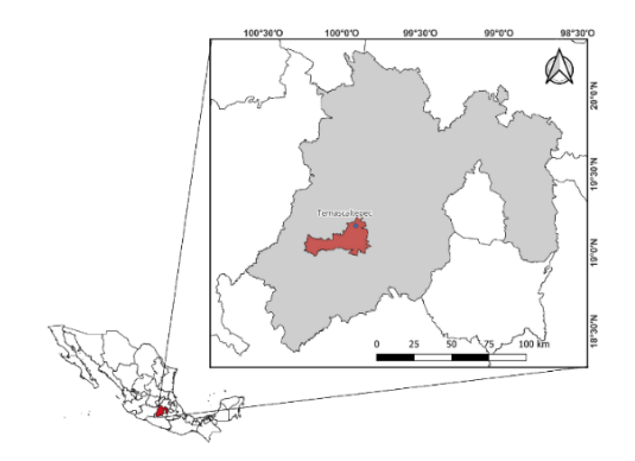
San Francisco Oxtotilpan is a Matlatzinca locality located in the municipality of Temascaltepec. The community has 1 506 inhabitants: 798 women and 708 men (INEGI, 2020). It is at an altitude of 2 700 m, has a subhumid climate and is surrounded by several mountains, including Zinacantepec, the Sierra de Temascaltepec, and Valle de Bravo (Gobierno del Estado de México, 2023) (Figure 1).
The community’s main economic activities are the use of forest resources and agriculture, and, more recently, the provision of tourist services. Its forests consist of conifers, oyamel firs, pines, oaks and ocotes. The collection of edible plants, backyard family gardens and the rearing of domestic animals are the basis of the Matlatzinca economy. The diet of the inhabitants of the locality consists mainly of corn, quelite, chili, mushrooms and broad beans; meat is eaten during festivities. Family gardens provide the diet with fruit and a variety of vegetables (Instituto Nacional de Pueblos Indígenas, 2018).
The selected informants were older adults who spoke Matlatzinca and were 60 years old or older, as in Mexico, people are regarded as older adults at this age (Congreso de la Unión, 2002) and who participated freely and voluntarily in the research. Of the locality’s elderly population, 145 are women and 116 men (INEGI, 2020); participation by sex was 55.6% and 44.4%, respectively; 30 interviews were conducted: 24 with women (80%) and 6 with men (20%).
The field research was conducted from March to September 2022 using the method by James Spradley (Garrido, 2017), who designed a technique for collecting information through interviews and fieldwork. This method was used to conduct interviews and to inquire about the sociodemographic profiles of older adults, the local environment in which they live, the ingredients and the preparation of some foods to obtain the community’s culinary techniques. Subsequently, through retrospective analysis and memory exercises, events from the past of older adults were obtained regarding foods they consumed in their childhood that are no longer consumed and those currently consumed.
The botanical specimens of quelites were obtained from the milpa system, forests and the ploughed furrows surrounding the community. Their identification was based on Rzedowski and Rzedowski (2004, 2010). The collection of edible insects was carried out through tours with informants and participant observation.
Regarding the age and occupation characteristics of the elderly population in the Matlatzinca community of San Francisco Oxtotilpan, the population was between 60 and 85 years old. All the informants stated that they were Matlatzinca speakers and were originally from the locality, as were their parents. These characteristics are similar to those found in other studies reporting that activities related to the field, agriculture and animal raising are an important part of the activities of older adults in the native communities of Mexico. Similarly, it is agreed that older adults’ activities vary between caring for the home and working in the fields (Ruíz, 2014; Torres, 2017) (Table 1).
The Matlatzinca people, like many native peoples of Mexico, have gastronomic elements that have been maintained since pre-Hispanic times, basing their daily diet on products from their milpa system, which integrates various species, such as corn, squash, beans, chili and quelites, as well as insects that are attracted to the system. As in other communities, the food products of the milpa system are complemented by the collection of quelites, edible insects, backyard animals, and, at other times, by the hunting of wild animals (Cano and Gómez, 2017; Zizumbo-Villarreal and Colunga-García, 2017; Leyva-Trinidad et al., 2020).
The word quelites comes from the Nahuatl term quiltil, which means the ingestion of leaves, stems and flowers in tender phases of plant development (Balcázar-Quiñonez et al., 2020). The use of quelites, known in the study community as ‘herbs of the forest’, in the diet of the Matlatzinca population is of utmost importance. The informants mentioned that they consume 27 different types of quelites, 96.29% are herbaceous and 3.7% arborescent. They are mainly collected in milpas, family gardens, ploughed furrows, or in the surroundings of the community, as well as in bodies of water (Table 2).
The consumption of quelites is also a valuable resource in other communities in the center of the country (Bourges et al., 2015; Balcázar-Quiñones et al., 2020; Viesca-González et al., 2022). In the Otomí community, an average of 68 different quelites are used (Balcázar-Quiñones et al., 2020). In San Francisco Oxtotilpan, a loss of traditional food knowledge, as well as of culinary techniques for preparing quelites, was observed. The informants mentioned that quelites are available mainly during the rainy season, which runs from July to September; they also mentioned consuming bean, broad bean and chilacayote leaves as quelites.
The elderly also remembered quelites such as jaboncillo o tinta, as well as squash and chayote vines, as foods from their childhood, quelites that are no longer consumed today (Table 2). Contrary to this loss, the Matlatzinca community currently uses bean and broad bean leaves as quelites. Ocampo’s (2020) study on the effect of bean leaf consumption mentions that ‘bean leaves are not considered part of the usual diet, they are only consumed in some regions of the country, mainly where ethnic groups remain’.
The milpa system not only provides cultivated species for the diets of different native communities in Mexico, but it is also a place from which people collect edible insects, which are attracted to the system by the plants established there, to complement their daily diet. Nevertheless, in San Francisco Oxtotilpan, the consumption of edible insects represents a significant loss of traditional food knowledge and culinary techniques (Table 3).
The informants recalled that insects were generally consumed during the rainy season, which runs from July to September, which the population called ‘the green season’. Nonetheless, ‘their extraction’, as mentioned by the informants, was difficult, as in the case of the maguey or ocote worms, which were found inside the maguey leaves or trunks, making their visual location difficult, which eventually led to the loss of this tradition of collection and consumption of insects (Table 3).
Another insect the elderly remember with nostalgia is the butterfly, particularly the monarch butterfly. Their harvest was also seasonal; in this case, the consumption months were November to January, when they were more easily found. For their consumption, it was noted that they removed the wings and roasted the butterflies to later consume them in tacos (Table 3).
Globally, there are considered to be approximately 2 111 species of edible insects (Cruz and Peniche, 2018); in Mexico, around 549 species are estimated (Gobierno de México, 2024); for their part, Ramos Elorduy et al. (1998) reported 104 species for the State of Mexico. In the Otomí community of San Pedro Arriba in the municipality of Temoaya, State of Mexico, insects such as ocote, maguey and jarilla worms, among many others, are currently tasted (Victoria-Morales et al., 2023), insects that were once consumed in the study area. The above data show how the consumption of edible insects in the community of San Francisco Oxtotilpan is related to the loss of traditional food knowledge and culinary techniques; as mentioned by Gasca-Álvarez and González (2022): ‘grandparents used to consume many types of insects’.
The traditional food knowledge of the elderly regarding the consumption of animals is divided into backyard and wild animals (Tables 3 and 4). Among the backyard animals that were consumed and are still consumed today are pigs, cows, sheep, chickens and turkeys. It is worth noting that, in the community, chicken and pork are sold; however, the consumption of these products was not included in the interview because they do not meet the criteria of being a backyard animal of the community (Tables 4 and 5).
Regarding the consumption of backyard animals, they have remained consumed in the gastronomy and diet of older adults, who in some cases, still raise these animals and use them for family consumption and as the main ingredient in some dishes. The consumption of cows and sheep is mainly at large celebrations, such as weddings, which differ from hens, which are consumed three or four times a year. Turkeys, like pigs, are eaten once or twice a year. Nava et al. (2018) mention that backyard animals play an important role in communities’ lives because they provide animal protein to the daily diet, and, sometimes, economic income is obtained from their sale.
In the case of pork consumption, the interviewees mentioned that, during their childhood, consumption was shared; that is, when an inhabitant of the locality sacrificed an animal, they gave it to their neighbors, and in this way, the meat was distributed among more households. Likewise, they used the lard obtained, which was stored, and in this way, they were able to fry some food. The storage method was in containers, usually made of clay and they kept them in a cool, shaded space.
On the other hand, during the development of this research through retrospective analysis, the loss of traditional food knowledge and culinary techniques in the consumption of wild animals, such as armadillos, rabbits or various birds, was observed. These were hunted, and older adults recalled them as nostalgic foods; that is, they were important foods during their childhood, but they no longer consume them. As with edible insects, the interviewees attributed this to factors such as the displacement of biodiversity due to changes in land use in the locality, which has shifted from forests to agriculture or housing.
Doves and sparrows were previously hunted in the locality’s open spaces, such as streets, houses’ courtyards, vacant lots and milpas. As a hunting instrument, a bag or sack was used, which made it easier to catch the birds and prevented them from escaping. The food obtained from the forest was of vital importance in the diet and gastronomy of the population, obtaining various animals from these ecosystems to complement their daily diet during their childhood. As can be seen, the Matlatzinca gastronomy around the consumption of wild and backyard animals was rich and varied. Authors such as Fa et al. (2013) emphasize the importance of hunting small species for native communities, as it provides animal protein and is only for self-consumption.
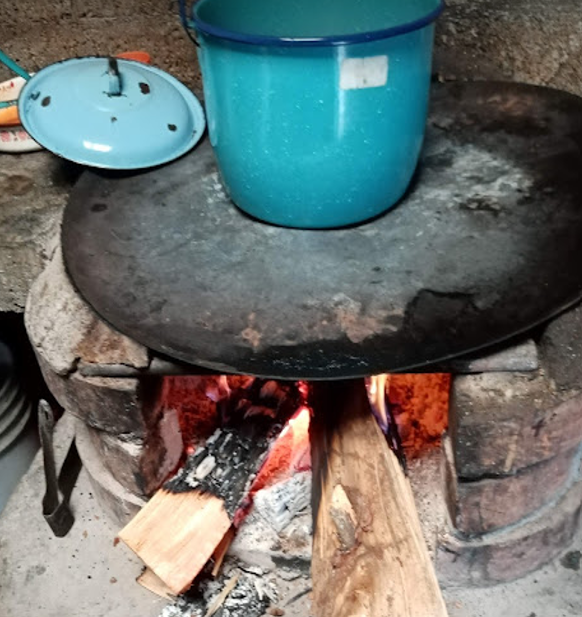
During their lives, older adults learned a series of culinary techniques that allowed them to cook foods, mainly animals, whether backyard or wild animals. These practices and procedures are preserved to the present day (Figure 2).
This technique consists of placing the food on a comal (a clay or metal circle) or over embers to cook it. The interviewees mentioned that, during their childhood, the comal was mainly made of clay and that today, it can also be made of metal. They stated that the taste of food prepared on the clay comal is more pleasant to them than that of food prepared on the metal comal. Wild animals were cooked using this technique. Rabbits, squirrels and armadillos were placed directly on the embers or the comal and only salt was added. These foods were only accompanied by tortillas and sauce. The maguey worms, ocote worms, jarilla worms and butterflies were placed on the comal to be roasted and only salt was added.
The interest of the country’s native communities, such as the Matlatzinca community, in recovering and maintaining traditional knowledge and culinary techniques, such as wood-fire cooking, as well as utensils used for food preparation, is evident because they are part of their gastronomic identity. Traditional food knowledge, such as edible insects and backyard and wild animals, was identified. The Matlatzinca population currently consumes five different backyard animals.
However, traditional food knowledge, such as the consumption of edible insects and wild animals, was lost. It is considered necessary to revalue the food knowledge and culinary techniques possessed by the elderly so that this traditional gastronomic knowledge is not lost, as it is the cultural heritage of the Matlatzinca community and gives identity to the population. In San Francisco Oxtotilpan, the traditional food knowledge of older adults is a potential resource for the community’s nutritional development, which, culturally, is the only community in which the Matlatzinca language is spoken. In addition to this, older adults are respected for their age and environmental knowledge to continue with their way of life.
Ocampo Aguiano, P. V. 2020. Análisis de la composición y efecto del consumo de hoja de frijol (Phaseolus vulgaris L.) en ratas Wistar con obesidad y diabetes mellitus. Tesis de Maestría en Ciencias de la Nutrición Humana. Universidad de Querétaro. 144 p. https://ri-ng.uaq.mx/bitstream/123456789/2618/1/RI005677.pdf.
Ruíz, M. M. V. 2014. Identificación de los saberes alimentarios ancestrales y sus aportes nutricionales para los problemas de malnutrición infantil en la comunidad de Maconta Debajo de Portoviejo Manabí. Tesis de licenciatura, Pontificia Universidad Católica del Ecuador. 82 p. https://repositorioslatinoamericanos.uchile.cl/handle/2250/2963993.
Torres, V. D. 2017. Recuperación de saberes de la memoria alimentaria y saberes ancestrales de los adultos mayores vinculados a la ULATA, Veredas de la Requilina y El Uval en USME. Tesis de licenciatura, Pontificia Universidad Javeriana. Bogotá, Colombia. 75 p. https://repository.javeriana.edu.co/bitstream/handle/10554/34841/1%20Trabajo%20de%20Grado.pdf?sequence=1&isAllowed=y.
Viesca-González, F. C.; Alvarado-Carrillo, D. J. y Quintero-Salazar, B. 2022. Los quelites en la ciudad de Toluca, México: su recolección, comercialización y consumo. Estudios sociales. Revista de alimentación contemporánea y desarrollo regional. 32(59):1-33. https://doi.org/10.24836/es.v32i59.1158.
Zarza, B. J.; Osorio, G. M. y Mantecón, A. 2022. La construcción de los productos turísticos alternativos en la comunidad de San Francisco Oxtotilpan, México. Estudio sobre los valores y significados de la población. Revista De Turismo Y Patrimonio Cultural. 20(5):1129-1142. https://doi.org/10.25145/j.pasos.2022.20.076.